Check out the winter sale! Check →


What materials are piercing jewelry made of?
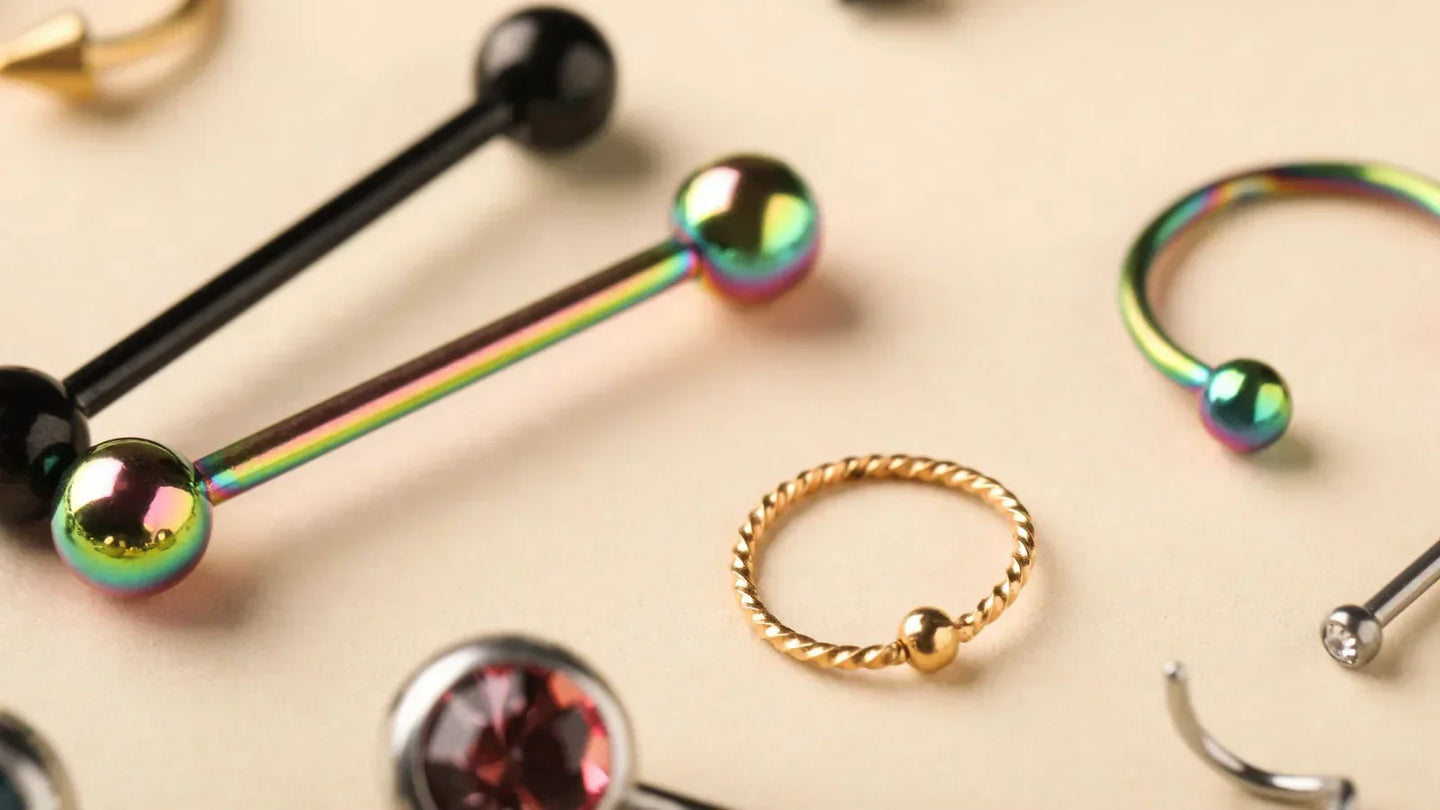
Piercing jewelry isn't just meant to reflect our preferences and express our individuality. We mustn't forget that earrings, whether worn on fresh or healed piercings, should be chosen with great care. Therefore, it's worth knowing the materials used to make piercing jewelry. What should we consider to ensure complete comfort and safety?

What materials are safe for allergy sufferers?
For those struggling with skin allergies, choosing the right materials for their piercing jewelry is crucial. A piercing worn over a fresh piercing (in other words, an open wound) must be biologically neutral to our bodies. Therefore, the best choices for allergy sufferers are:
- Titanium studs - Highly polished titanium IMPLANT GRADE ASTM-F136 is used in the medical field for the production of subdermal implants, for example. Therefore, it is an excellent material for the first piercing stud, worn on a fresh piercing.
- Earrings made of high-quality 316L surgical steel. Although it is a metal alloy, high-quality steel contains small amounts of biologically active nickel. Therefore, it does not pose a risk to those with allergies. However, care should be taken to ensure that the surgical steel is not coated with a layer of varnish, as this may impede the healing process.
- Bioplast earrings are a highly malleable, hypoallergenic, and artificially produced material. They are fully biocompatible with the body, as they contain no metals. Their flexibility, softness, and ease of cleaning make them ideal for oral piercings.
What to avoid on a fresh piercing?
If you have a fresh piercing, you should primarily avoid metals that can cause infections, irritation, or allergic reactions. Therefore, during the healing phase, you should avoid nickel and metal alloys containing it, such as:
- low-quality stainless steel - this alloy may contain an admixture of nickel, so it is recommended to avoid buying piercing earrings from sources that we are not sure about (the popular "Chinese": or chain stores);
- Silver-nickel mixtures - some types of piercing jewelry, especially gold- or silver-plated ones, may contain nickel.
- bioplast - although it is a hypoallergenic material, it is not recommended for use on fresh piercings located outside the mouth and/or oral cavity.
Why does nickel cause allergic reactions?
Nickel is one of the most common allergenic materials used in inexpensive piercing jewelry . It can lead to painful contact dermatitis. How? Nickel has the ability to bind to proteins in human skin. It creates dangerous bonds that stimulate immune responses in the body; this not only delays the healing process of a fresh piercing but also poses a health risk.
Therefore, you should always make sure that jewelry for a new piercing is free of this metal. It's safest to buy earrings from reputable sources, such as piercing salons or online stores, that stock jewelry made from materials that have passed the necessary tests.
How to recognize low-quality stainless steel?
Another material to avoid during the healing phase of a fresh piercing is lower-quality stainless steel. This alloy may also contain metal additives that are not biologically safe for people with sensitive skin. How can you tell if surgical steel is low quality? Piercing jewelry made of 316L steel has the necessary certificates and approvals, which a reputable manufacturer should provide to the customer if they request them at the time of purchase.
Why is there such a difference in the price of earrings?
The price of piercing jewelry varies depending on the brand, design, material availability, and processing difficulty. Titanium or 316L surgical steel earrings can be significantly more expensive than those made from cheaper alloys, such as lower-quality stainless steel. However, this is still a mid-range option, as piercing jewelry made from precious metals like gold or silver will be by far the most expensive.
It's worth remembering, however, that investing in high-quality piercings, especially those for a fresh piercing, is an investment in your own health. They provide greater comfort, minimize the risk of allergic reactions and infections, and allow for long-term, worry-free wearing of earrings... and I think everyone wants to sleep soundly after a visit to the piercer!